


A successful nano glass stone order begins long before the slabs enter production. For architects, contractors, fabricators and importers, the decisive work is translating a design idea into a complete material specification: application, color, thickness, slab or finished size, edge details, inspection criteria, packing and delivery terms.
Simply requesting “white nano glass, 18 mm” leaves too many decisions open. The material may be correct, yet the project can still lose time through an inefficient cutting layout, unconfirmed cutouts, unclear face orientation or unsuitable packing. This guide explains how to prepare a practical nano glass stone specification that a manufacturer can quote, sample, fabricate and inspect accurately.
Quick answer: what should a nano glass stone specification include?
Before requesting a final quotation, confirm nine items: intended application, material and color, surface finish, thickness, slab or finished dimensions, fabrication drawings, quantity and spare pieces, inspection requirements, and packing plus Incoterm. A physical approval sample and a numbered shop-drawing package should be agreed before mass production.
What is nano crystallized glass stone?
Nano crystallized glass stone, also called nano glass stone or crystallized glass stone, is a glass-based architectural surface made from mineral raw materials through high-temperature melting and controlled crystallization. Its dense structure, low water absorption, high polish and clean appearance make it useful for interior walls, countertops, stairs, furniture components and selected cladding applications.
It should not be confused with resin-bound engineered quartz or a surface coating applied to ordinary stone. Because the material, production route and fabrication behavior are different, the specification should identify it clearly as nano crystallized glass stone and name the approved product, color and finish.

1. Start with the application and support condition
The first question is not “Which thickness is cheapest?” It is “What will the finished piece do, and how will it be supported?” A continuously supported wall lining, a vanity top with cutouts and a stair tread have different fabrication and installation demands even if they use the same color.
State whether the stone will be used for an interior wall, floor, countertop, reception desk, furniture surface, stair, window sill, column, decorative screen or exterior cladding. Also identify the substrate or supporting frame, panel span, fixing method, exposure to water or weather, expected traffic and any local code requirements.
| Nominal thickness | Common project discussion | Items to confirm |
|---|---|---|
| 12 mm | Decorative wall linings, furniture faces and printed panels where continuous support is available. | Substrate flatness, fixing system, cutout position and handling during installation. |
| 18 mm | A versatile option for many wall panels, vanity components, tabletops and cut-to-size interior pieces. | Finished span, edge profile, openings, reinforcement and local fabrication capability. |
| 30 mm | Substantial countertops, stair components and designs that require a visibly solid edge. | Unit weight, support, lifting access, edge treatment and transport protection. |
Design note: These are procurement starting points, not universal structural rules. The project architect, engineer, installer and fixing-system supplier should approve the final thickness and support arrangement for the actual use and local regulations.
2. Define the color system and approval standard
ZONVE offers pure white nano glass stone, super-black crystallized glass panels, marble-inspired products and custom printed glass stone. Each route creates a different visual expectation.


For a commercial project, approve samples under the lighting in which the material will be seen. Daylight, warm interior lighting and directional spotlights can produce different perceptions of whiteness, gloss and reflection. The approval record should identify the sample code, product name, nominal thickness, finish and date.
For printed or marble-effect panels, add the digital artwork reference, color target, scale, orientation, repeat strategy and panel-to-panel layout. A small sample can confirm color, but a reduced or full-size layout is needed to confirm how a pattern moves across a large wall.
3. Match slab size to the cutting plan
Common ZONVE slab formats include 2800 × 1600 mm, 3000 × 1500 mm and 3200 × 1600 mm, with 12 mm, 18 mm and 30 mm thickness options depending on the product. Current production and stock availability should always be reconfirmed when the order is placed.

The largest slab is not automatically the most economical. A good choice depends on the finished-piece schedule. Send the manufacturer a dimensioned cutting list so the available formats can be compared by yield, number of joints, piece weight and packing efficiency.
For irregular pieces, include a CAD or PDF nesting plan. For repeated items, identify the quantity of every size rather than giving only the net square metres. Add spare pieces by type, especially for shapes that would be difficult to reproduce locally after installation begins.
4. Decide whether to buy slabs or cut-to-size panels
| Supply route | Best suited to | Main advantage | Main control point |
|---|---|---|---|
| Full slabs | Importers and fabricators with suitable local cutting, polishing and handling equipment. | Flexibility to adjust dimensions and nesting after arrival. | Local fabrication quality, breakage allowance and leftover material. |
| Cut-to-size panels | Projects with an approved panel schedule and limited on-site processing. | Factory-controlled dimensions, edges, openings and piece labels. | Shop-drawing accuracy and change control before production. |
| Finished components | Countertops, stairs, columns, sills, screens and special-shaped work. | Complex fabrication can be completed before export. | Templates, tolerances, installation interfaces and protective packing. |
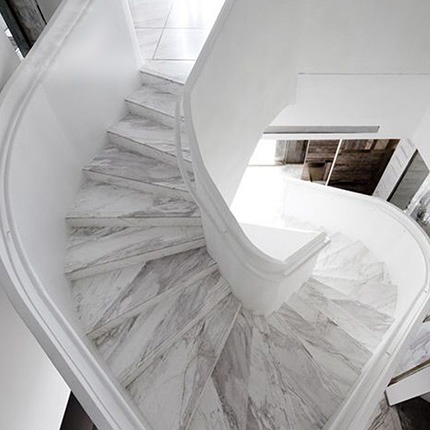
ZONVE can process nano glass into stairs, columns, window sills, counters and other custom finished panels. Factory fabrication is especially useful when the project requires repetitive dimensions, polished edges, grooves, holes, sink openings, curved work or individual piece numbering.

5. Make the fabrication drawings production-ready
Every finished piece should have a unique drawing number. Do not rely on screenshots, marked-up photographs or one overall floor plan when individual fabrication is required. A production drawing package should show:
- Finished length, width and thickness
- Visible face and back face
- Edge profile on each side
- Polished, honed or concealed edges
- Hole and cutout dimensions
- Internal corner radii
- Groove, rebate and slot details
- Pattern or print orientation
- Joint positions and joint width
- Piece code and installation location
- Quantity per drawing number
- Required dimensional tolerances
When field dimensions are not final, separate “design intent” drawings from “approved for production” drawings. Record every revision. The manufacturer should produce only from the latest signed or formally approved version.
6. Agree on inspection before production
Quality language such as “Grade A” or “good quality” is too subjective for an international project order. Convert expectations into an inspection checklist and an approved reference sample. The exact acceptance criteria can then be agreed according to the product, fabrication level and contract.
Recommended pre-shipment inspection points
- Product identity: approved color, finish, thickness and production batch.
- Appearance: color consistency, gloss, visible inclusions, surface marks and edge condition under agreed lighting.
- Dimensions: slab or finished-piece measurements checked against the approved schedule.
- Fabrication: holes, cutouts, grooves, edge profiles and piece orientation checked against numbered drawings.
- Quantity: main pieces, spare pieces and accessories reconciled with the packing list.
- Identification: piece labels and crate numbers matched to the installation or unloading sequence.
- Packing: separators, corner protection, frame or crate stability and moisture protection inspected before container loading.
For higher-risk orders, agree whether the buyer will inspect in person, appoint a third-party inspector or accept a documented factory inspection with photos and measurements. The inspection method should be decided in the purchase contract, not after the goods are ready.
7. Design the packing around unloading and installation
Nano glass stone is dense and rigid, so transport protection must address face-to-face abrasion, edge impact, unsupported movement and unsafe handling. Large slabs are generally stored and transported vertically on suitable frames, while finished pieces may require purpose-built wooden crates, separators, corner protection and clear lifting marks.
Ask for a preliminary packing proposal before confirming freight. It should show the estimated number of frames or crates, gross weight, dimensions and the distribution of pieces. If the site has a restricted unloading zone, crane limit, lift size or narrow access route, provide that information before the packing plan is finalized.
The purchase order should also state the named place and trade term. The International Chamber of Commerce Incoterms® rules clarify how transport tasks, costs and risks are divided between seller and buyer. Writing only “FOB” or “CIF” is incomplete; include the named port and the applicable rules version.
8. Use this RFQ template for a faster, more accurate quotation
A clear RFQ reduces back-and-forth communication and makes competing quotations easier to compare. Copy the following structure and attach drawings, schedules and reference images:
Project name and location:
Buyer / contractor / fabricator:
Application:
Material: Nano crystallized glass stone
Product / color / finish:
Nominal thickness:
Required slab size or finished-piece schedule:
Net area and quantity by size:
Spare-piece requirement:
Fabrication: edges / holes / cutouts / grooves / curved work:
Drawing numbers and revision:
Approval sample required: Yes / No
Inspection requirement:
Packing and piece-label requirement:
Requested Incoterm and named place:
Destination port or delivery address:
Required delivery date:
Documents required with shipment:
Other project or local-code requirements:
Why work directly with a nano glass stone manufacturer?
Direct manufacturer involvement is most valuable when the project goes beyond standard slabs. It allows the design team to coordinate stock formats, cutting yield, sample approval, fabrication feasibility, production sequence, inspection and packing as one workflow.
ZONVE (Zhongjun Zhuangyi New Materials Co., Ltd.) has manufactured nano crystallized glass stone in China since 2012. Its headquarters is in Guanqiao Town, Nan’an, Quanzhou, Fujian, with access to export logistics through nearby Xiamen Port. Buyers can review full slabs, colors and applications in the ZONVE project gallery, then submit a project schedule for material and fabrication review.
Frequently asked questions
What information is needed to quote nano crystallized glass stone?
At minimum, provide the application, color, finish, thickness, slab or finished dimensions, quantity, fabrication details, destination and requested Incoterm. Drawings and a piece schedule are needed for an accurate cut-to-size quotation.
What slab sizes and thicknesses are available?
Common ZONVE formats include 2800 × 1600 mm, 3000 × 1500 mm and 3200 × 1600 mm. Common thicknesses include 12 mm, 18 mm and 30 mm, depending on the product. Confirm current stock and production availability before finalizing the cutting plan.
Should a project buy full slabs or cut-to-size panels?
Full slabs suit buyers with capable local fabrication and a need for flexibility. Cut-to-size panels suit projects with approved shop drawings, repeated dimensions or limited on-site processing. Finished components are often preferable for complex edges, openings, stairs and special shapes.
Can nano glass stone be customized?
Yes. Depending on the product and design, customization can include finished size, edge processing, holes, cutouts, grooves, hot-bent or special-shaped components and printed decorative patterns. Feasibility should be reviewed from drawings before production.
How should color and finish be approved?
Approve a coded physical sample under relevant project lighting and record the product, finish, thickness and date. For printed or patterned panels, also approve artwork, scale, direction and the panel layout.
How should nano glass slabs be packed for export?
Large slabs normally require stable vertical frames with separation and edge protection. Cut-to-size pieces may require purpose-built crates, individual labels and packing arranged by unloading or installation sequence. The final method depends on piece size, weight and destination handling conditions.
Send your project schedule for review
Share the application, drawings, sizes, quantity and destination. ZONVE can review the suitable slab format, fabrication route, packing plan and quotation for your nano crystallized glass stone project.
Nano Glass Stone Specification: Key Takeaways
This guide gives international readers a clear overview of nano glass stone specification. It highlights practical details and the main points to consider.
Information for Commercial Buyers
ZONVE supports architects, contractors, fabricators and distributors. Share the application, dimensions, quantity, finish and delivery market. Our export team can confirm specifications, samples, fabrication options, packing, lead time and quotation.